Industry Application | You might think that the competition in submerged arc furnace automation is about functions, but in fact, it's about on-site survival capability.
 2026-03-31
The Real Starting Point: Stability, Not Functionality
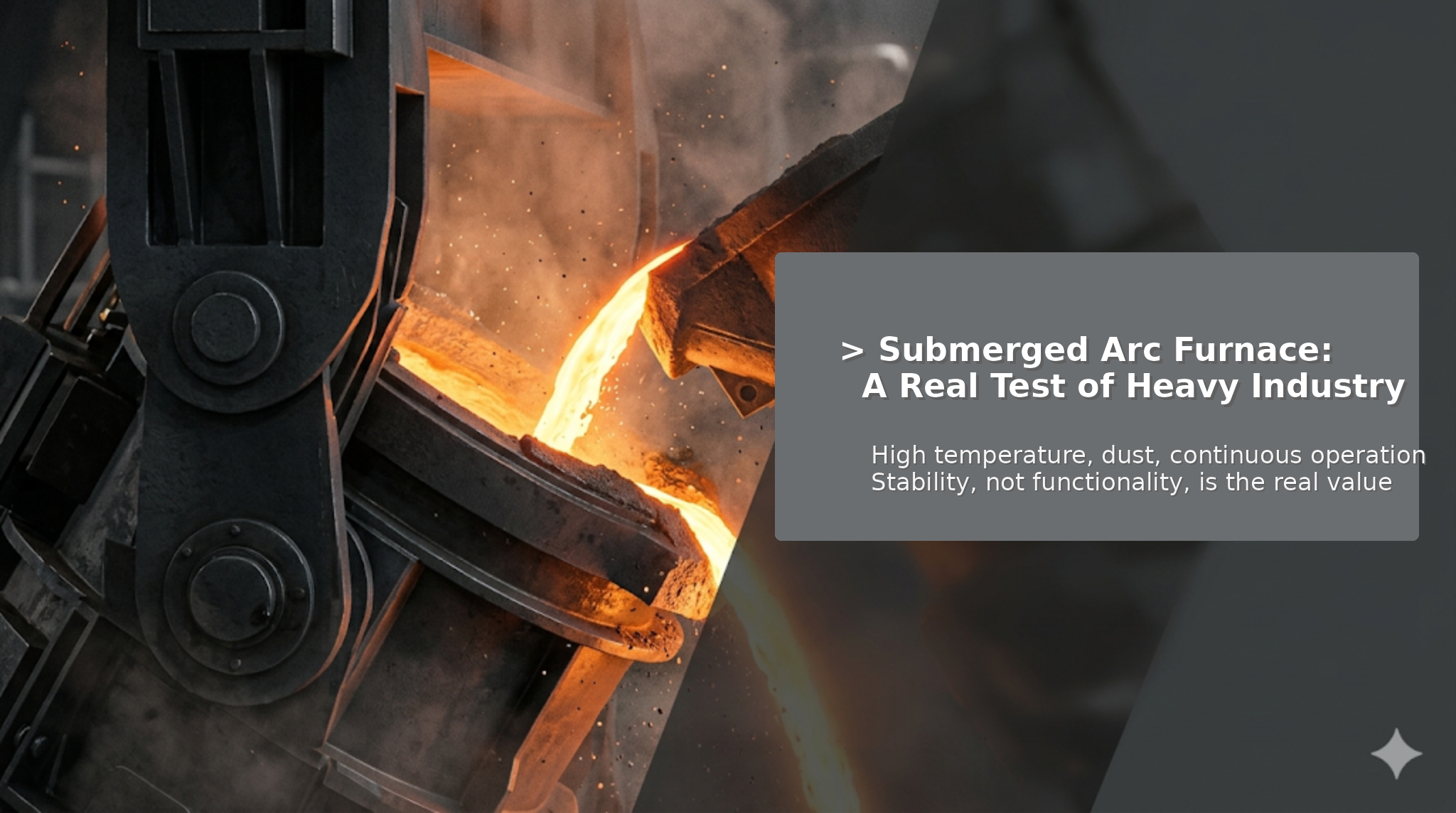
Submerged arc furnaces are typical heavy-industry application scenarios. High temperatures, dust, continuous operation, large-scale equipment, and numerous peripheral units — these characteristics make their requirements for automation products quite different from those of general industrial equipment.
Once entering the site, what customers experience first is not how advanced the system architecture is, but whether the products truly fit the field environment and can operate reliably over the long term. Whether front-end installation is practical, whether wiring is clear, whether faults can be diagnosed easily, and whether maintenance and replacement are convenient — compared with simply “being able to realize functions,” these factors determine the real value of a solution far more directly.
In peripheral systems of submerged arc furnaces, cooling, hydraulics, lubrication, auxiliary mechanisms, and scattered status feedback points together create the real complexity of field automation. Whoever can organize these device-side nodes more clearly and deploy them more rationally is more likely to deliver a solution that truly works in practice.
Why Emphasize IP67 Field-Level Products?
The Key Nodes Are Located in the Harshest Positions
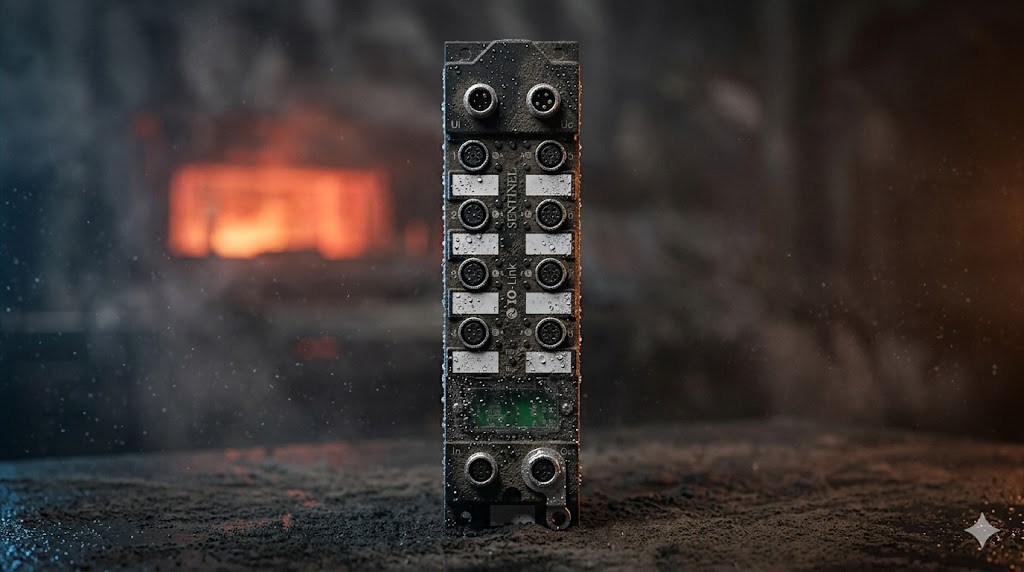
Many key acquisition points in submerged arc furnace projects are not located inside relatively protected control cabinets, but distributed closer to the actual operating positions of the equipment. These areas are often exposed to high concentrations of dust, moisture and condensation, high-pressure washdown, severe vibration, and large temperature fluctuations.
For masters, hubs, and sensors deployed in these positions, the first question to solve is not “can they be connected to the system,” but “can they work reliably on site over the long term?” If front-end nodes do not have sufficient protection and environmental adaptability, stable acquisition, transmission, and control become difficult to achieve. That is why peripheral systems of submerged arc furnaces place greater emphasis on structural reliability, installation suitability, and long-term operating stability — rather than simply on the number of available functions.
The Real Meaning of the Field Environment
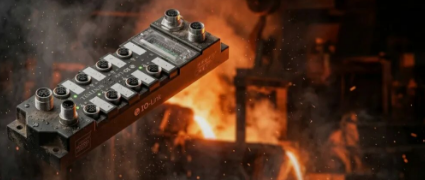
Represented by Sentinel’s IP67 field-level products, stable operation can still be maintained even under extreme conditions such as immersion in water or icing. This is not merely a protection rating — it is proof of the structural reliability of the product under complex environmental changes. In heavy-industry applications such as submerged arc furnaces, only when the front-end nodes themselves are reliable enough to withstand moisture, condensation, washdown, and fluctuating environmental conditions can data acquisition, transmission, and control truly be implemented in a stable way. The value of such products lies in providing a more reliable foundation for the entire signal chain.
Clear Wiring Matters More Than Stacking Functions
The Real Challenge Brought by Scattered Points
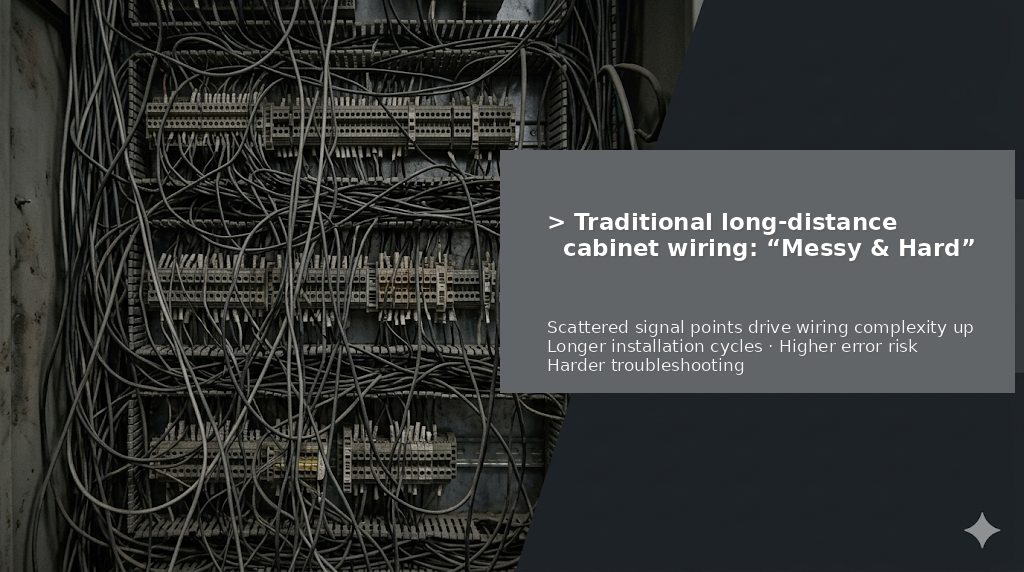
A typical feature of peripheral systems in submerged arc furnaces is that signal points are widely distributed and system types are diverse. The cooling circuit is one system, hydraulics and lubrication are other systems, and auxiliary mechanisms and status feedback form yet another set of independent systems.
If all signals are routed back to the cabinet in the traditional way over long distances, the required functions may still be achieved. However, as the number of points increases, the system will face rapidly rising wiring complexity. Construction cycles become longer, and the risk of errors also increases. Once a fault occurs, troubleshooting becomes much more difficult, and locating the problem takes more time. Worse still, any later modification may affect the entire system, making costs extremely high.
The Real Value of IO-Link
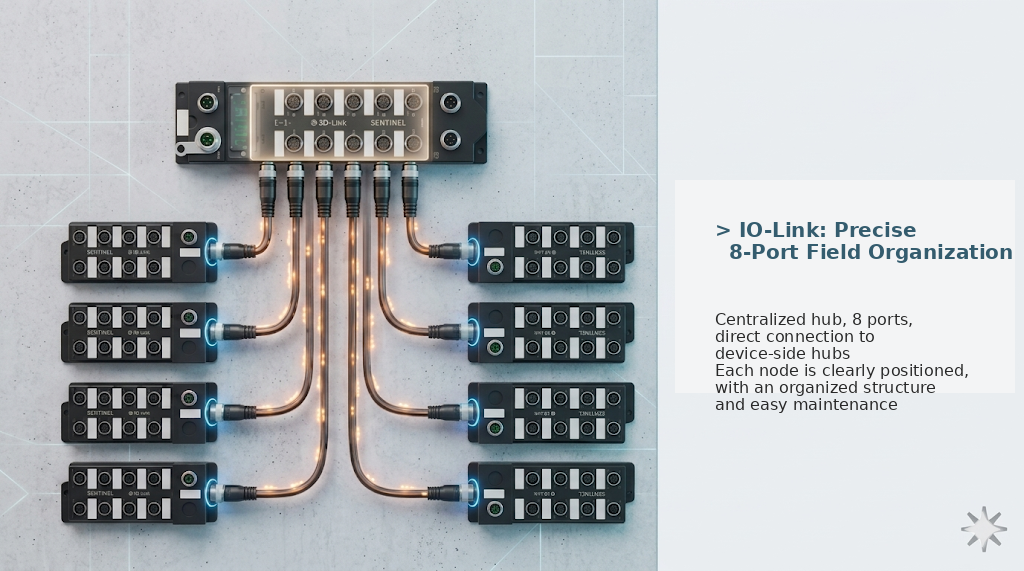
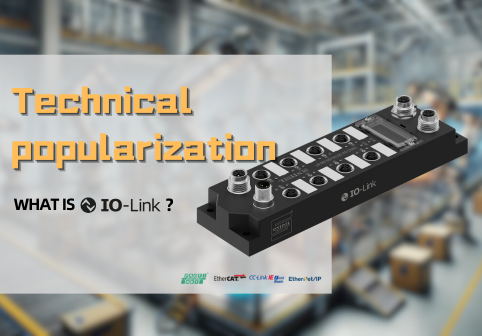
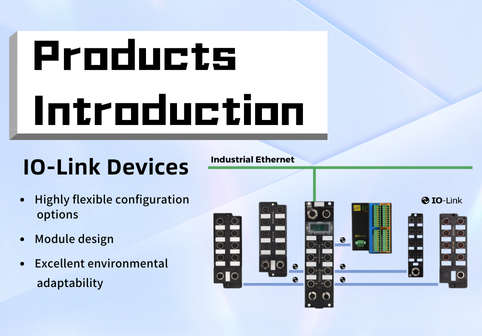
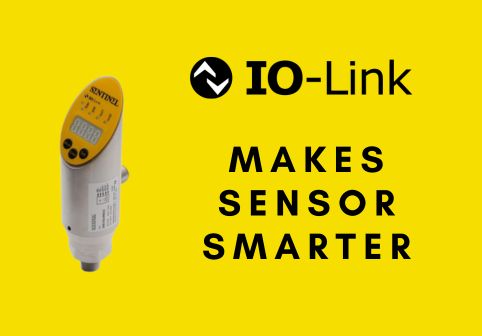
The value of IO-Link in such scenarios lies not only in communication itself, but also in its ability to organize the field side. Through device-side masters, hubs, and field sensors, data acquisition can be pushed closer to the equipment installation points. More importantly, this makes signal paths clearer, with the logical starting point and ownership of each line visible and easy to understand. The entire wiring structure becomes more organized, reducing the number of connections while improving maintainability. When later expansion is required, new points can be added more easily in the right locations, allowing the system to maintain a clear structure over time.
For submerged arc furnace equipment that runs continuously with limited maintenance windows, the more organized the wiring, the easier it is to keep the system stable in long-term operation. The true value of an automation solution is often not about adding more functions, but about making the field-side chain smoother and more manageable.
Maintenance Experience Determines the Customer’s Real Evaluation
A submerged arc furnace is not a piece of equipment whose story ends once delivery is completed. After entering the operating stage, customers continuously face the need for rapid recovery from single-point failures, periodic preventive maintenance, newly added functions or detection points, as well as system optimization and upgrading.
At this stage, whether automation products are easy to identify, easy to restore, and quick to replace often becomes more persuasive than the initial function demonstration. When front-end masters, hubs, and sensors adopt more standardized connection methods, on-site replacement becomes faster and more efficient, fault recovery follows a clearer process, and system expansion can maintain a more organized structure. This capability of “saving effort later” often determines the customer’s real evaluation of the solution — especially in the submerged arc furnace industry, where continuous operation is critical.
The Truly Valuable Direction of Upgrading
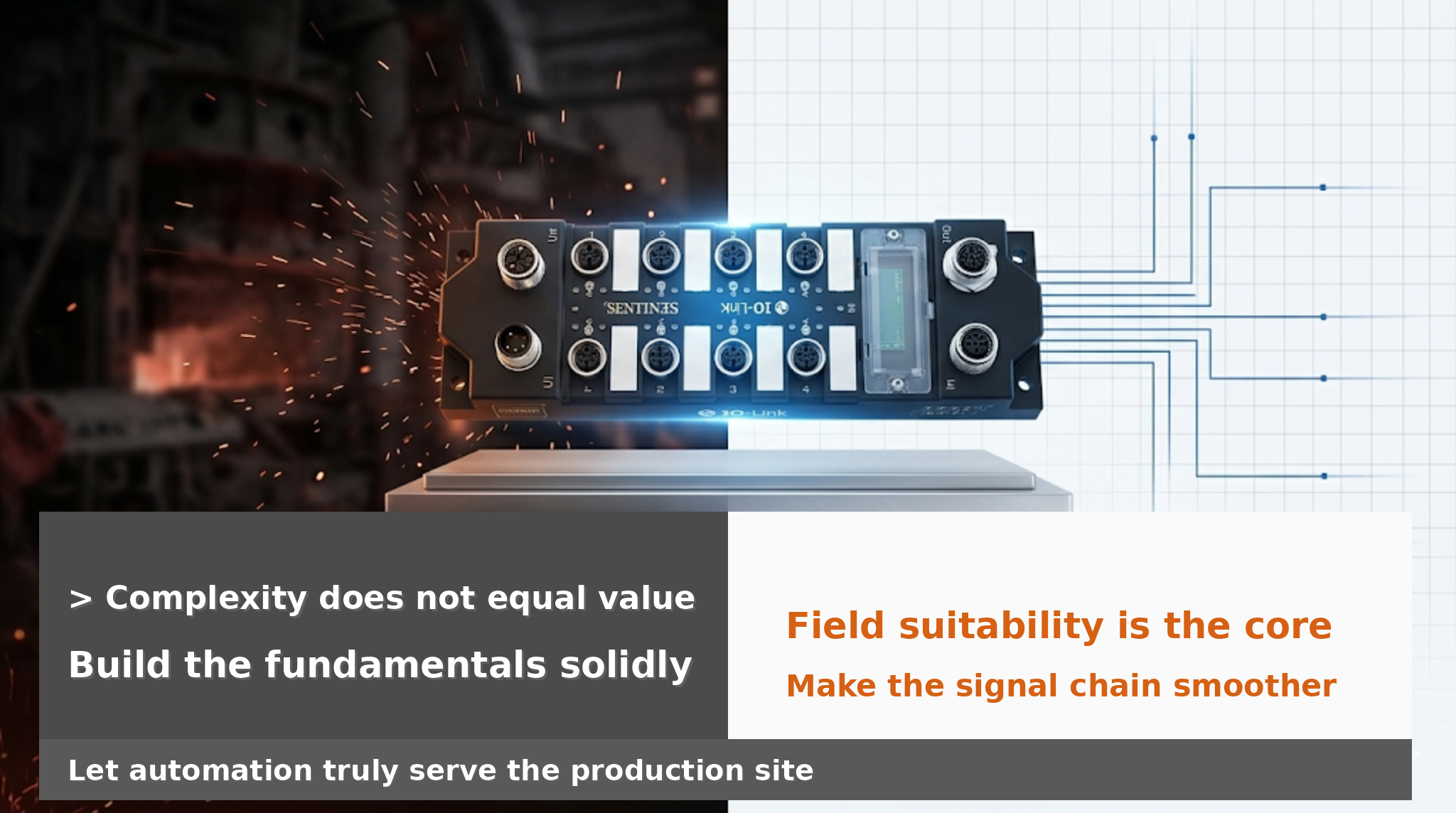
The submerged arc furnace industry certainly needs automation upgrades, but such upgrades do not necessarily mean becoming more and more complex. In many projects, the more valuable improvements lie in strengthening the fundamentals — making front-end products more suitable for field environments, making device-side wiring clearer and more organized, making node deployment more logical, and making later maintenance more efficient and convenient.
Some may ask why peripheral systems of submerged arc furnaces are better suited to emphasizing IP67 field-level products. The answer is simple: key acquisition nodes are located on the equipment side, facing complex working conditions such as dust, moisture, condensation, and washdown. Front-end products must first satisfy protection and structural reliability requirements. Only when the front-end nodes themselves are suitable for the field can subsequent acquisition, transmission, and control operate stably.
The same logic also applies to IO-Link. Beyond communication, the more important value of IO-Link lies in its device-side organization and management capability — making scattered points easier to organize, making wiring structures clearer, and making maintenance and replacement more efficient. This is especially critical for peripheral systems of submerged arc furnaces, where points are widely distributed. In actual deployment, field-level masters, hubs, and sensors are typically better placed around distributed points near cooling, hydraulics, lubrication, and various auxiliary mechanisms. These locations are far from the control cabinet, exposed to complex conditions, and involve scattered signal types — exactly where moving acquisition capability closer to the equipment provides the greatest advantage. Through such deployment, the overall system wiring becomes clearer, and later troubleshooting and maintenance become much more convenient.
Complexity does not necessarily equal value. Suitability for the field is what really matters. Only when products can truly enter the field, remain in the field, and serve the field can the real meaning of an automation solution be fully realized.
FAQ
1. Why are IP67 field-level products more suitable for peripheral systems of submerged arc furnaces?
Because many key nodes are located on the equipment side rather than inside the control cabinet. In the face of dust, moisture, condensation, washdown, and temperature fluctuations, field products must first meet requirements for protection and structural reliability. Only when the front-end nodes themselves are truly suitable for the field can data acquisition, transmission, and control remain stable.
2. In this type of scenario, where does the value of IO-Link mainly lie?
In addition to communication itself, the more important value of IO-Link is that it makes device-side connection relationships clearer, makes scattered points easier to organize, and improves the efficiency of later replacement, maintenance, and expansion. This is especially important in scenarios such as peripheral systems of submerged arc furnaces, where points are widely distributed.
3. In peripheral systems of submerged arc furnaces, where are field-level masters, hubs, and sensors better deployed?
They are generally better deployed around distributed points near cooling, hydraulics, lubrication, and various auxiliary mechanisms. These locations are usually far from the control cabinet, exposed to more complex environmental conditions, and involve more scattered signal types. By adopting field-level masters, hubs, and sensors, front-end acquisition can be brought closer to the equipment, wiring structures become clearer, and later troubleshooting and maintenance become more convenient.
Customer Support and Service
Tianjin Sentinel Electronics has been deeply engaged in industrial automation for 17 years and has delivered more than 170 application cases across industries such as rail transit, automotive manufacturing, and new energy. We provide full-cycle services ranging from sensor selection and system integration to after-sales diagnostics. If you would like to learn more about Sentinel products, please contact our sales team or call us at +86-22-83726972. You may also visit Sentinel’s website at www.sentinel-china.com.
You are welcome to book an online demonstration or apply for sample testing, and let our engineers tailor a complete solution for you — from “data entry” to “action execution.”